






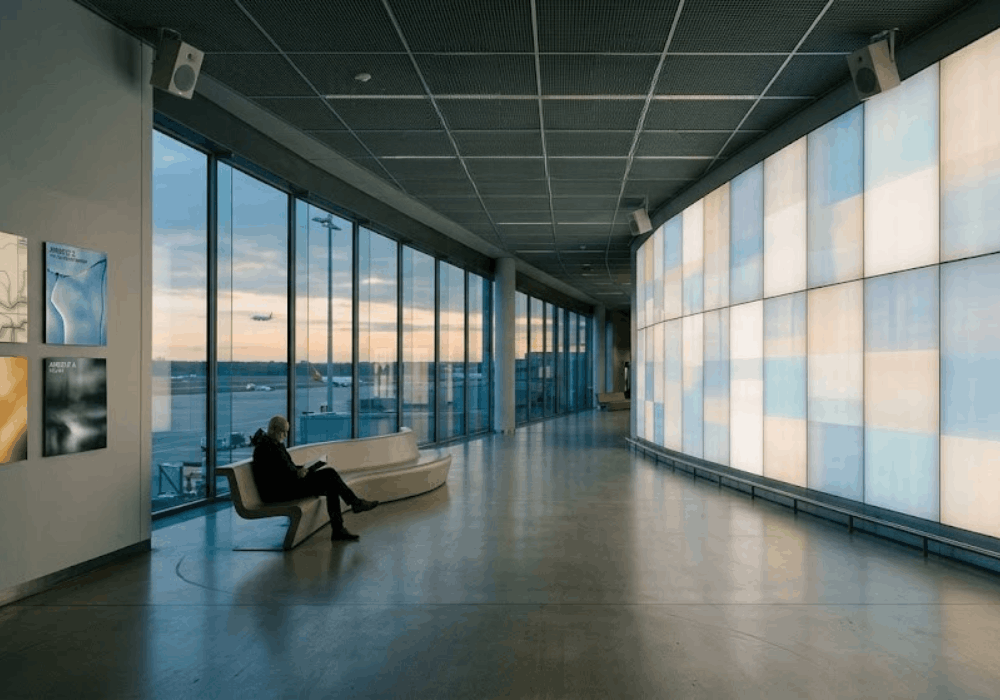
 The Brian Eno Ambient series officially began with a 1978 release designed to defuse the anxious atmosphere of an airport terminal. This collection, which concluded with 1982’s Ambient 4: On Land, consists of four distinct albums that fundamentally redefined how listeners interact with sound. By utilizing tape loops of differing lengths, Eno created compositions designed to be played as continuous sound installations, offering a sophisticated alternative to “canned” Muzak or traditional easy listening styles.
The conceptual roots of the series date back to 1975, following a car accident that left Eno hospitalized. While recovering, his friend Judy Nylon played an album of classical harp music at a very low volume. The music blended with the sound of rain against the window, and because Eno was unable to adjust the volume, he found the experience aligned with his fluctuating attention.
This event, combined with Erik Satie’s concept of “furniture music”—pieces intended to “mingle with the sound of the knives and forks at dinner”—shaped Eno’s approach. His 1975 album Discreet Music served as his first foray into this territory, eventually leading to the formal Brian Eno Ambient series.
The series comprises four unique volumes, each exploring a different texture of the “space for thought” Eno intended to create.
This is the foundational text of the series. Designed as a functional sound installation to alleviate the “canned” feeling of travel, it was built from layered tape loops of wordless vocals and acoustic piano. Because the loops are “incommensurable” (different lengths that don’t perfectly sync), the music shifts constantly, creating an ever-changing sonic cloud.
A collaboration with minimalist composer and pianist Harold Budd, this album is often considered the most “beautiful” and melodic entry in the Brian Eno Ambient series. Eno acted as a “treater,” setting up a sound world of reverb and delay while Budd improvised on the piano, adjusting his playing to match the electronic resonance of the room in real-time.
This entry is unique as it features American musician Laraaji as the primary performer, with Eno serving as the producer. It is the most acoustic and rhythmic of the four, focusing on the hammered dulcimer and zither. The album moves from fast, hypnotic patterns resembling a metallic gamelan to deep, shimmering drones.
The final and darkest entry moved away from “soothing” music toward what is now recognized as Dark Ambient. Eno shifted his focus from synthesizers to “composting”—mixing field recordings and nature sounds like sticks, stones, and chains into the audio. It evokes specific geographical locations, such as the Suffolk coast, creating a swampy and occasionally ominous atmosphere.
The impact of the Brian Eno Ambient series has been validated by major music publications over the decades. In 2004, Rolling Stone credited the first album in the series, Music for Airports, with successfully defining the ambient genre. Furthermore, in 2016, Pitchfork ranked the record as the greatest ambient album of all time, cementing its place in music history.
Big Black Cow Radio · Free on Spotify
Hand-built playlists straight out of the record room — Muscle Shoals soul, outlaw country, goldmine deep cuts, late night jazz, and The Big Black Cow Indie 50, stocked from artist submissions. Curated by humans. Zero paid placement, ever.