

I am probably the least objective person you could ask about The Family, but I may also have one of the more unusual perspectives on this record.
I am married to Dylan LeBlanc’s twin sister, and for roughly fifteen years I have had a seat inside the musical world that produced Dylan, James LeBlanc, Angela Hacker and Bay Simpson. I have heard these people sing in kitchens and living rooms. I have watched guitars get passed around simply because there was a guitar nearby and someone had something worth singing.
I also toured behind Dylan’s first record, Paupers Field. I watched the excitement of him getting his first record deal, played a short run of gigs in the UK and crashed in the flats above Rough Trade. I even ended up in his first music video shoot in Nashville. At the time, I was trying to find my own way into music.
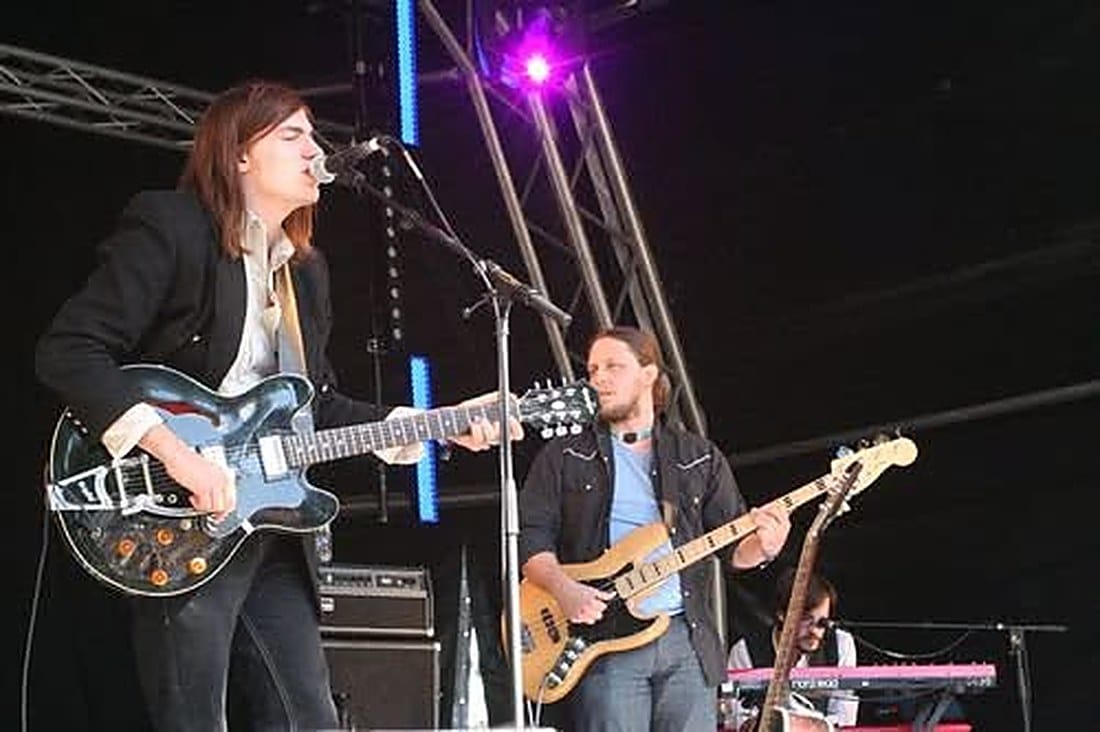
One of my clearest memories from that period is playing with James in the kitchen. My memory of his exact words may have been softened by time—and probably (definitely) by the warm haze of a few drinks—but the lesson has stayed with me for fifteen years.
He told me, essentially:
Any time you are playing, even if you are completely by yourself, play and sing like you are performing in front of 10,000 people.
That tells you something about The Family.
Their commitment is to the music, but more importantly, it is to the song.

My own life eventually carried me somewhere else. I became a Naval aviator and officer. The stage gave way to cockpits and deployments, but I never stopped listening. I became a serious record collector and eventually founded Big Black Cow Records.
As a collector, you eventually stop thinking about great music strictly in terms of decades or genres. The records that endure usually contain something more fundamental. A twenty-year-old can hear one thing in a song and hear something completely different in it twenty years later.
The record has not changed.
The listener has.
“I’ll Take It” feels like one of those songs.
To me, it represents an art form that has nearly disappeared: the power ballad played completely straight.
There is no irony in it. No apology for its scale.
It is completely unafraid of sincerity.
The track is built from swirling, phased-out Fender Rhodes, dreamlike descending arpeggios, synthesizers, acoustic and electric guitars, and enormous family harmonies. The rhythm section pushes without rushing, while the high falsetto harmonies and split “oohs” and “aahs” keep widening the song.
There is something about family harmony that is difficult to manufacture. When people share blood, history and years spent singing in the same rooms, they can lock together in ways that go beyond technical precision.
These harmonies did not begin in a vocal session. They began in a home.

Sonically, “I’ll Take It” has some of the widescreen melodic ambition I associate with 10cc, Player and Foreigner, and with the best records later placed under the broad umbrella of yacht rock.
But then those unmistakably Southern voices come through.
With a different production treatment and presented to a different audience, the exact same song could easily be heard as a chart-topping country song.
Same song. Same melody. Same lyric. Same voices.
The bones are already there: direct storytelling, romantic tension, a massive chorus and voices that could not hide where they come from if they tried.
The audience may change. The production may change. The song does not have to.
That is possible because The Family is not a group of musicians learning how songs work while making a record. They are proven songwriters and artists with real commercial success behind them.
James has written songs recorded by major country artists. Dylan has built an international career on his own songwriting and records. Angela is a proven songwriter and a singer who can break your heart with somebody else’s song. Bay brings another generation of that same musical family and his own emerging career.
The Family is not one songwriter surrounded by supporting musicians.
It is a concentration of songwriters.
Producer Brad Crisler places all of that inside what he calls “retro-future” sound. The songs are rooted in older traditions, but modern textures—synthesizers, unusual keyboards, effects and electronic colors that can bring to mind Tame Impala, Daft Punk or The Weeknd—live quietly beneath the surface.

The key is restraint.
You may not notice a sound the first time you hear the record. On the fifth or tenth listen, suddenly there it is: a synthesizer behind a vocal, a guitar tucked to one side, an unusual percussion instrument, a hammered dulcimer.
The first listen gives you the song. The next ten give you the record.
Beneath all of that production, “I’ll Take It” works because of one of the oldest devices in songwriting:
tension and release.
The entire lyric exists on a threshold.

There is a song begging two people to dance. A cold beer waiting to be held. A full moon offering them a chance. A road waiting to be traveled.
The world itself seems to be conspiring to bring these two people together.
There’s a song begging us to dance.
That is a deceptively clever opening line.
The singer does not even make the first move.
The song does.
Then the chorus arrives:
If it’s the rest of our lives or just tonight
I’ll take it.
At twenty, that line can be pure heat: youthful infatuation, desire and the uncertainty of what happens next.
Later, it can mean something completely different.
A lover. A dream. An opportunity. A second chance. Your own version of happiness.
The song does not resolve the uncertainty.
It makes certainty unnecessary.
That idea lands differently for me now.
I am an active-duty Naval aviator and a combat veteran. I have spent much of my adult life in an occupation where risk is real and the margin for error can be unforgiving. I have seen combat and experienced levels of stress that changed my relationship with time.
It took me years to understand that being aware of mortality does not automatically teach you how to live. You can become so focused on the next mission, the next responsibility or simply getting through the day that you forget to inhabit the life you are working so hard to protect.
I had to learn how to recognize the good while it was actually happening.
How to stop postponing happiness until some imaginary future when every problem had been solved.
That future does not exist.
So when I hear:
If it’s the rest of our lives or just tonight
I’ll take it.
I hear more than a love song.
I hear the decision to take the chance while the chance exists.
And, in a strange way, that is the story of this entire record.
Delusions of Grandeur is a desperate attempt to make something materialize through talent, willpower and a shared dream.
But the delusion is not believing these people are talented.
That part has already been tested.
There are decades of songwriting, records, touring and real commercial success behind this band. The delusion, if there is one, is believing all of that can be gathered into one record, released independently, and made to matter on the scale we believe it deserves to matter.
Because behind all of that experience, the truth is almost absurdly simple:
It is just us.
A family.
An independent record label.
A group of people putting a tremendous amount of time, money and energy behind the belief that these songs deserve to be heard.
There is no enormous machine behind us. There is no guarantee any of it comes back.
This is not blind confidence. It is informed risk.
We know enough about music to understand how difficult this is. We know enough about the industry to understand that great songs do not guarantee an audience.
We are taking the chance anyway.
Maybe that is our actual Delusions of Grandeur: not believing success is guaranteed, but having the audacity to believe something enormous might still be possible—and putting everything we have behind that possibility.
Musically, “I’ll Take It” eventually reaches the same kind of release.
After the Rhodes, synthesizers, harmonies and carefully layered production, the song ends with something beautifully simple: a single-pickup Les Paul Junior plugged straight into a 1964 Fender Deluxe and cranked.
One guitar. One pickup. One amp.
The tone has the bite I associate with Billy Gibbons. The solo climbs through ascending double-stops, building until the tension finally releases.
For all the record’s modern textures and retro-future production, nobody involved has forgotten what a great guitar plugged into a great amplifier is supposed to sound like.
That may be what I love most about The Family.
This is a record made by people who have spent the better part of their lives inside one of the greatest songwriting and studio traditions on the planet. James has a phrase for what remains when everything else is stripped away:
“Wire and wood.”
That tradition still exists in Muscle Shoals—in kitchens, living rooms and backyards where guitars are passed around and people sing because that is simply what they have always done.
The Family carries that tradition.
Obviously, I am biased.
This is my family, and Big Black Cow Records is releasing the album.
But fifteen years ago, I watched the beginning of Dylan’s career from the van and the stage. My own life went somewhere completely different, and for years music existed alongside a life that had taken me far from the one I once imagined for myself.
Then my daughter Scarlett began her own musical journey, and I found my way back to records.
Not in the way I expected.
Not as the musician onstage, but as a father. Then as a record collector. Then, somehow, as the founder of an independent record label.
And now, in perhaps my own delusion of grandeur, I find myself helping release a record made by the same family whose kitchens, living rooms and songs helped shape my own understanding of music fifteen years ago.
There is something beautifully improbable about that.
But then again, this entire record exists because a group of people believed something improbable was worth attempting.
We have the record.
We believe in it.
We have the opportunity in front of us.
That is enough reason to take the chance.






Big Black Cow Radio · Free on Spotify
Hand-built playlists straight out of the record room — Muscle Shoals soul, outlaw country, goldmine deep cuts, late night jazz, and The Big Black Cow Indie 50, stocked from artist submissions. Curated by humans. Zero paid placement, ever.