




Understanding the history of US record stores means looking directly into the broader narrative of American music itself. From the early days of phonographs and 78 RPM discs to the vinyl revival of today, these storefronts have consistently served as more than just retail spaces. They have functioned as essential cultural meeting places, discovery hubs, and foundational community institutions.
The first record retailers were not the specialized shops music fans picture today. Instead, early merchants typically sold sheet music, phonographs, radios, and shellac 78 RPM discs as part of larger department stores or appliance shops.
As radio and jukebox culture spread throughout the 1920s and 1930s, the market expanded rapidly alongside the popularity of recorded tracks. This formative period laid the critical groundwork for the modern music shop. For the first time, music was transforming into a commodity that people bought, collected, and replayed at home, rather than an art form experienced exclusively through live performance.
The postwar years brought a structural transformation to the entire music business. In 1948, Columbia introduced the 33⅓ RPM LP (Long Play), and RCA Victor closely followed with the 45 RPM single. These twin formats permanently altered how people consumed music, directly shaping the evolution and layout of the retail music storefront
While the LP established the album as a serious, immersive listening experience, the 45 RPM disc drove a booming singles market targeting the youth culture. Together, these innovations encouraged store owners to specialize deeply in recorded music and organize their inventory around emerging consumer buying habits.
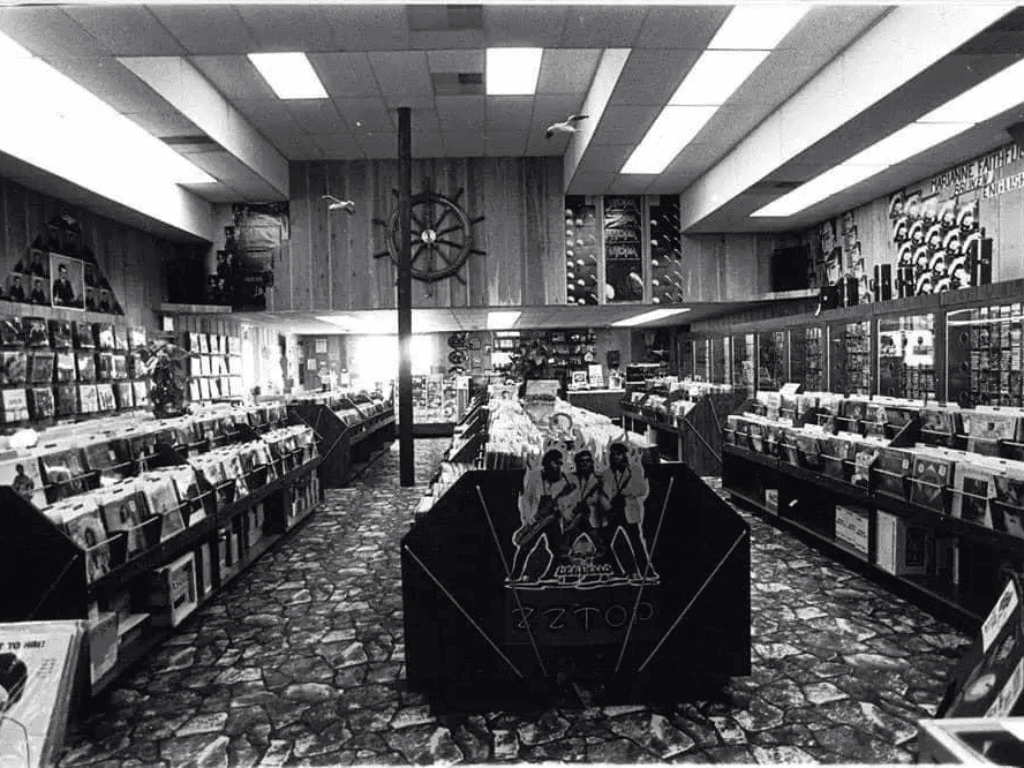
During this vibrant era, physical storefronts became deeply woven into the fabric of American youth culture. Independent shops flourished in cities and towns across the country, frequently specializing in genres like jazz, rhythm and blues, soul, rock, country, punk, and early hip-hop.
For the average customer, these businesses were safe havens for musical exploration. Staff recommendations, in-store listening booths, localized gig flyers, and casual conversations all played an active role in shaping public taste. People gathered at their local shops not merely to make a purchase, but to debate music, track new trends, and connect with fellow fans.
Music shops did not just reflect existing mainstream trends; they actively helped create them. In punk and alternative subcultures, independent storefronts served as the primary physical hubs where fans traded underground zines, flyers, demo tapes, and news about local bands. Cities like New York, Los Angeles, Minneapolis, and Seattle featured prominent shops that became vital pillars of underground music scenes.
Simultaneously, the early foundations of hip-hop grew through dedicated music retail spaces. Disc jockeys routinely searched through rows of used inventory for obscure funk, soul, and breakbeat records, establishing the art of “crate digging” as a cornerstone of DJ practice.
Iconic Hubs: New York City’s Rock and Soul became exceptionally important to local DJs, producers, and rising artists. These shops functioned as informal community centers, allowing underground movements to spread decades before the internet existed.
While independent stores anchored local scenes, massive commercial chains grew into dominant market forces. Tower Records became globally famous for its expansive mega-stores, late-night operating hours, and encyclopedic back-catalogs. Meanwhile, brands like Sam Goody and the National Record Mart helped make physical music retail a standard, familiar feature of suburban shopping malls and commercial centers.
The arrival of the compact disc (CD) brought another massive shift to the history of US record stores. Retailers pivoted heavily into the CD format because the discs were highly durable, deeply profitable, and widely adopted by consumers who rushed to replace their old vinyl collections.
This format replacement created an unprecedented retail boom, making physical music sales incredibly lucrative. Large corporate chains dominated shopping centers throughout this era. By the late 1990s, driven largely by premium CD sales, the United States music business reached record-breaking revenue levels, and physical storefronts seemed permanently secure as the primary gateway to music consumption.
The stability of the brick-and-mortar music shop broke down dramatically in the early 2000s. The rapid rise of MP3 downloads, peer-to-peer file-sharing networks like Napster, online retail alternatives, and eventual streaming platforms fundamentally altered how the public accessed audio.
Physical sales fell sharply across the country, resulting in the closure of thousands of storefronts between the years 2000 and 2010. When Tower Records completely shut down its domestic U.S. retail operations in 2006, it served as a symbolic end to the classic era of music retail. This decline was more than an economic contraction; it marked the abrupt loss of public spaces dedicated to shared musical discovery.
Just when physical formats appeared entirely obsolete, vinyl staged an unexpected comeback. Collectors, audiophiles, professional DJs, independent music fans, and a new generation of younger listeners began rediscovering records for their analog sound quality, expansive gatefold artwork, and physical presence. This steady climb in sales throughout the 2010s made local music shops culturally relevant again.
Record Store Day, created in 2007 and officially launched in 2008, accelerated this retail stabilization by promoting independent shops through exclusive, limited-edition vinyl releases, artist appearances, and in-store performances. Modern music shops stay competitive by emphasizing curated selections, used inventory, rare pressings, and a welcoming community atmosphere. While some locations have integrated espresso bars or live event programming, the core of the experience remains rooted in the joy of physical discovery.
Several historic names achieved legendary status for giving distinct music scenes a physical place to gather and grow:
The long history of US record stores directly mirrors the trajectory of American music media. Storefronts rose with the commercialization of recorded sound, thrived through successive format shifts, nearly vanished during the digital revolution, and successfully returned by anchoring modern vinyl culture.
These institutions survive today because they offer experiences that streaming algorithms cannot replicate: authentic human recommendations, true physical ownership, beautiful, tangible packaging, and the tactile pleasure of browsing the bins. Ultimately, they remain vital because they are spaces where music stays social, tangible, and memorable.
Big Black Cow Radio · Free on Spotify
Hand-built playlists straight out of the record room — Muscle Shoals soul, outlaw country, goldmine deep cuts, late night jazz, and The Big Black Cow Indie 50, stocked from artist submissions. Curated by humans. Zero paid placement, ever.